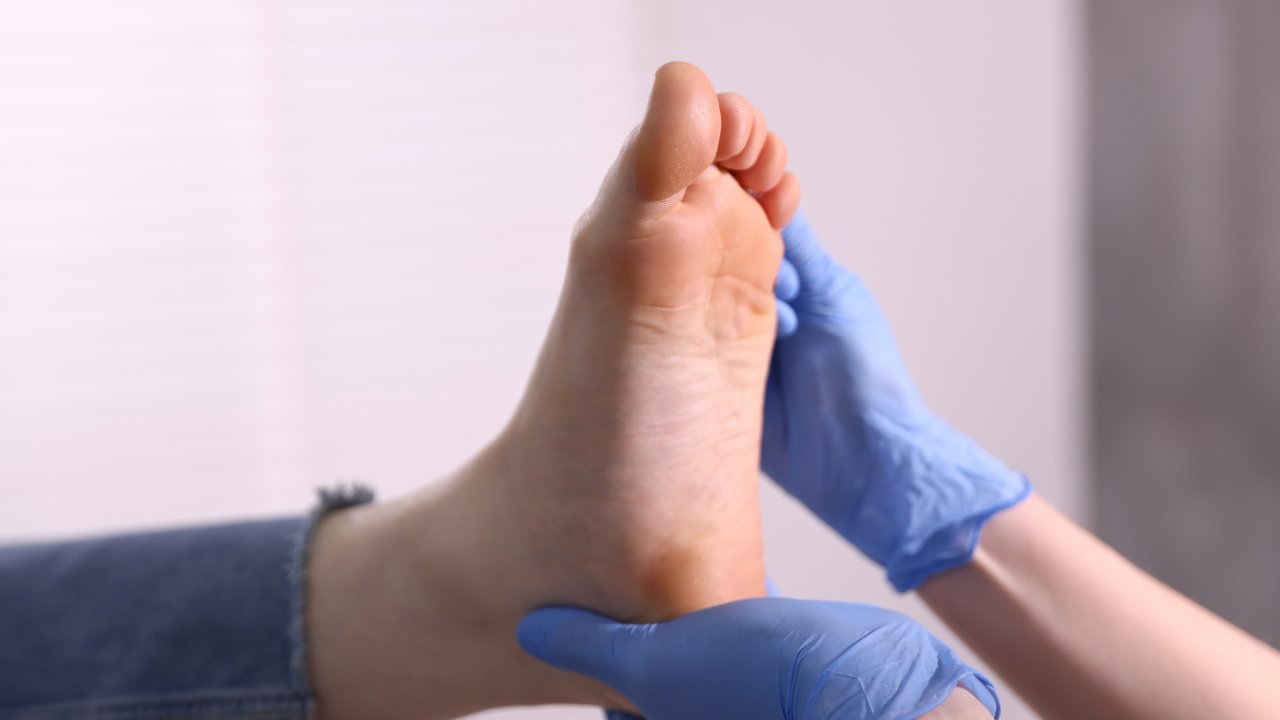
Diabetes can reduce sensation and circulation in the feet, which makes small injuries harder to notice and slower to heal. A consistent daily routine is one of the most effective ways to catch problems early.
Daily Checklist
- Inspect both feet, top and bottom, including between the toes
- Wash feet in lukewarm water and dry thoroughly
- Apply lotion to prevent cracking, avoiding the areas between toes
- Trim nails straight across
- Check the inside of shoes before putting them on
- Always wear supportive, properly fitted footwear
- Note any changes in temperature, color, or sensation
Warning Signs to Watch For
- Cuts or sores that aren't healing
- Redness, swelling, or warmth
- Numbness or tingling
- Any drainage or odor
When to Schedule a Visit
Diabetic patients should have a foot exam at least once a year, and sooner if any of the warning signs above appear. Regular check-ins allow us to monitor circulation and nerve function and catch developing issues before they become serious.
Don't Take Our Word for It
Our office includes four exam rooms, free parking, and an on-site surgical suite, making routine diabetic foot checks simple and efficient, so you can spend less time in a waiting room and more time enjoying the Willamette Valley.
If it's been a while since your last diabetic foot exam, schedule an appointment with our office today.
This article is for general information only and isn't a substitute for proper evaluation.