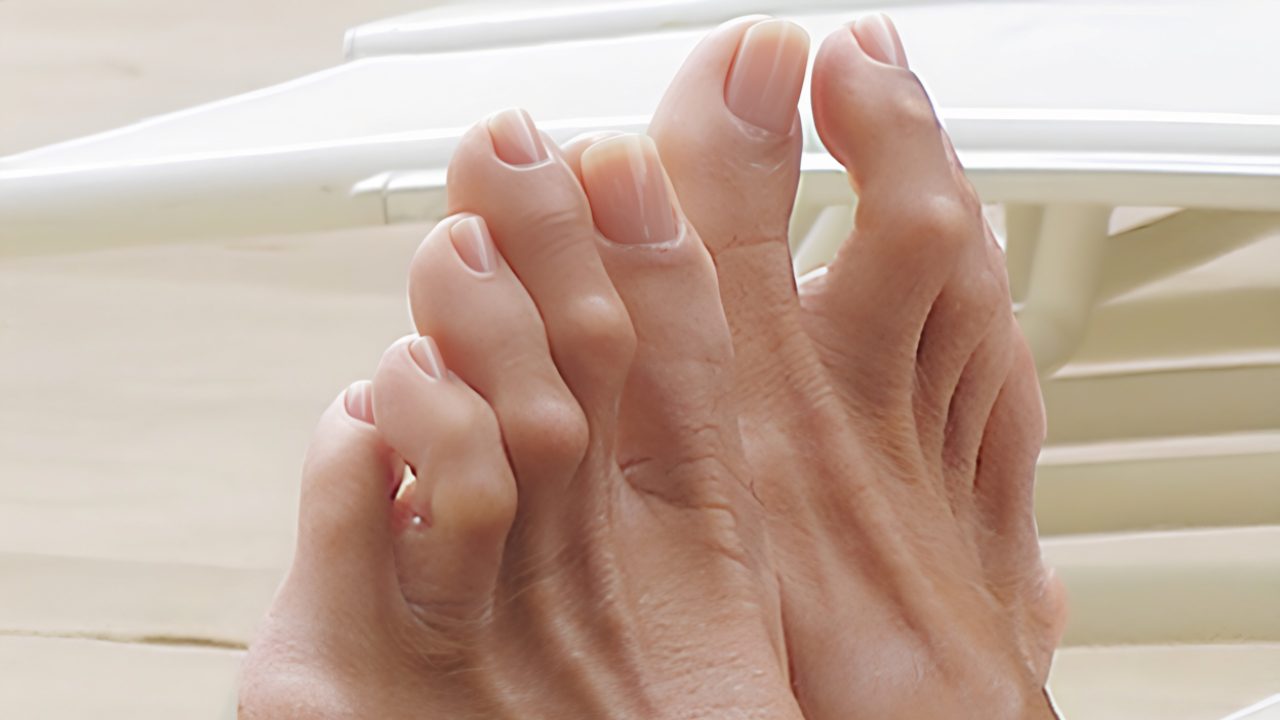
Hammertoe is a deformity in which a toe bends downward at the middle joint, giving it a curled or claw-like appearance. It most often affects the second, third, or fourth toe, and it tends to progress gradually, which is why early evaluation can make a difference in how it is managed.
What Causes Hammertoe
- Shoes that are too narrow, short, or tight in the toe box
- Muscle or tendon imbalance in the foot
- Foot structure, including bunions, flat feet, or high arches
- A previous toe injury
- Conditions that affect the nerves or joints, such as arthritis or diabetes
Symptoms
- A toe that is bent at the middle joint
- Pain or irritation at the top of the bent joint, especially from shoe pressure
- Corns or calluses on the top of the toe or the tip
- Redness, swelling, or burning
- Difficulty finding comfortable shoes
- Stiffness or limited movement of the toe
Flexible vs. Rigid Hammertoe
In the early stage, the toe remains flexible, meaning it can still be straightened manually. Over time, the joint can stiffen and become fixed in the bent position. The distinction matters because flexible hammertoes are often managed with conservative measures, while rigid hammertoes are more likely to require surgical correction.
Treatment Options
Conservative care is the first step for most patients and may include:
- Shoes with a deep, wide toe box
- Padding or toe sleeves to reduce friction
- Custom or over-the-counter orthotics to improve foot mechanics
- Stretching and strengthening exercises for the toes
- Careful care of any corns or calluses
Surgical treatment may be recommended when pain persists despite conservative care, or when the toe has become rigid. The procedure is designed to relieve pain and straighten the toe, and the specific approach depends on the severity and flexibility of the deformity.
When to Schedule a Visit
Schedule an evaluation if a toe is becoming more bent over time, if you have recurring corns or sores on the toe, or if the pain is limiting your daily activities. Patients with diabetes or circulation concerns should have any toe deformity checked promptly, since pressure sores can develop more easily.
If a bent toe is keeping you from enjoying the Willamette Valley, schedule an appointment with our office.
This article is for general information only and isn't a substitute for proper evaluation.